|
As Workpackage leader (Specialized Social Services) - and representative of the Community Action Eurordis EU and Member States for rare diseases, I participated in a working visit to rare diseases Agrenska Center in Sweden, together with my colleague Raquel Castro project manager.Agrenska offers programs for children, adolescents and adults with disabilities caused by rare diseases, their families and professionals involved in disease management. Agrenska is a meeting place, training and creativity, a blend of skills and knowledge, and the purpose of the center is to contribute to improving the quality of life of beneficiaries encouraging them to become more independent.
Components:
• National Competence Centre for Rare Diseases
• Program for families
• Program for adults
• Respiro Centre
• Counseling
• Training for professionals
• Agrenska Academy
In 2005 Agrenska launched a program for adults with rare diseases, since then organizing groups with the same diagnosis. The purpose of these groups is to put the spotlight on people who are in a similar situation, to be informed and trained to form support groups and share experiences.
During these groups, participants are enrolled in a training program on various aspects of their disease. Discussions and presentations are focused on the expressed needs of patients. Agrenska provides the latest knowledge on medical, psychosocial and educational issues as well as on legislation and social support needed by families in this situation. Participants also have time to discuss their situation and needs with professionals and each other, sharing their experiences, fears and hopes.
|
|
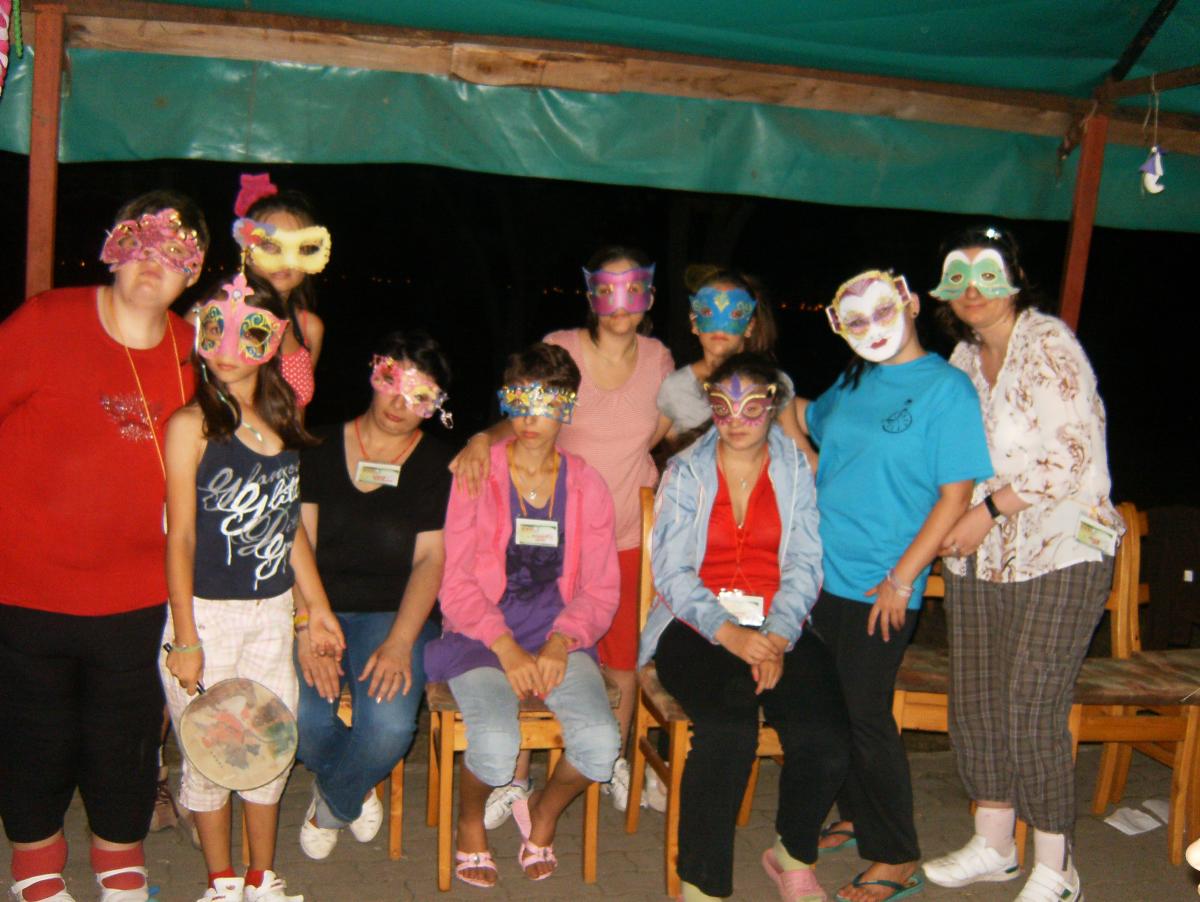
In August, the third edition of Bobald camp was held in Satu Mare, near Carei by Werdnig Hoffman Association in collaboration with Prader Willi Association from Romania. At this event we gathered around 65 people, including participants from across the country, companions, volunteers and people who have made an important contribution in organizing the event. During the week we conducted a series of socio-educational and recreation activities that created a pleasant atmosphere for all. On the first day, we all gathered together and we presented ourselves. There were also newcomers among them in camp. Activities during the week included art therapy: making masks, bracelets and socio educational activities such as: dance, karaoke, bingo, rummy, dominoes, puzzle contest, activity "No offense bro!", contest the "Miss and Mister Bobald" and "Masked Ball". We had the opportunity to meet with special guests such as Father Radu Filip, who spoke about the importance of faith in God, "Carei Gendarmerie" who have made a series of demonstrations in case of emergencies. The Friday night concert at the Carei Days gave us the opportunity to meet with Voltaj band. The young people were very excited; they took pictures with the band and got autographs. The camp ended with hugs and promises about returning to Bobald the next year too.
Darko Emese, special education teacher RPWA |
|
The International Association of Bobath Instructors (IBITA) in collaboration with Băile Felix Medical Rehabilitation Hospital organized a course on "Evaluation and treatment of adults with neurological disorders following the Bobath Concept" between 10-18 August 2012 (module I) and 3-8 October 2012 (module II) with a duration of 110 hours (8 hours / day). From APWR, Florica Tegzeş physiotherapists attended the class.
The course was held by Anna Kiss Fehérné, physiotherapist, basic course trainer IBITA. During the course we received theoretical information on the Bobath concept that we then used in the applied phase, when we conducted the evaluation and treatment according to this concept.
The Bobath concept was originally developed and defined in 1950 by Berta and Karel Bobath, Berta was a physical therapist and Karel a neurologist and psychiatrist. They recognized the need of the concept to remain dynamic and the fact that it should evolve based on the continuous neuroscientific development.
The Bobath concept is now defined as an approach to solve the evaluation and treatment of individuals with function, movement and postural control disorders, due to damage to the central nervous system. The Bobath concept can be applied to patients with stroke, spastic tetraparesis, Parkinson's, multiple sclerosis, brain injury, spinal cord injury.
|